
You used to wake up energized and ready to tackle the day. Now? You hit the snooze button three times and still feel exhausted. Your clothes fit tighter despite eating the same foods. And that spark you once had—in the gym, in the bedroom, in life—seems to have dimmed.
If this sounds familiar, you're not alone. Over 40% of men over age 45 have clinically low testosterone, and many more experience borderline levels that still cause noticeable symptoms. The problem is that low testosterone doesn't announce itself with a single dramatic symptom. Instead, it creeps in gradually, manifesting through a constellation of physical, mental, and sexual changes that many men dismiss as "just getting older."
But here's the truth: while testosterone naturally declines with age, debilitating symptoms are not inevitable. Understanding what low testosterone looks like is the first step toward reclaiming your vitality.
What Is Low Testosterone?
Testosterone is the primary male sex hormone responsible for developing and maintaining masculine characteristics. It's produced primarily in the testicles and plays crucial roles throughout your body.
Medical professionals typically define low testosterone (also called hypogonadism or "Low T") as blood testosterone levels below 300 nanograms per deciliter (ng/dL). However, "normal" ranges are broad—typically 300-1000 ng/dL—and what's optimal for one man may be insufficient for another.
More important than the specific number is how you feel. You could have testosterone levels at 400 ng/dL and experience significant symptoms, while another man at the same level feels perfectly fine. This is why understanding the symptoms is critical.
The Natural Decline
Testosterone production peaks in your late teens to early twenties, then begins declining by approximately 1-2% per year after age 30. By age 45, many men have lost 15-30% of their peak testosterone levels. By 60, that decline can reach 40-50%.
This gradual decline explains why symptoms often develop so slowly that men don't recognize them until they're significantly impacting quality of life. You might attribute fatigue to work stress, weight gain to a slower metabolism, or reduced sex drive to relationship issues—never connecting these dots to a hormonal imbalance.
Physical Symptoms of Low Testosterone
Low testosterone affects your body in numerous visible and measurable ways. Here are the most common physical symptoms:
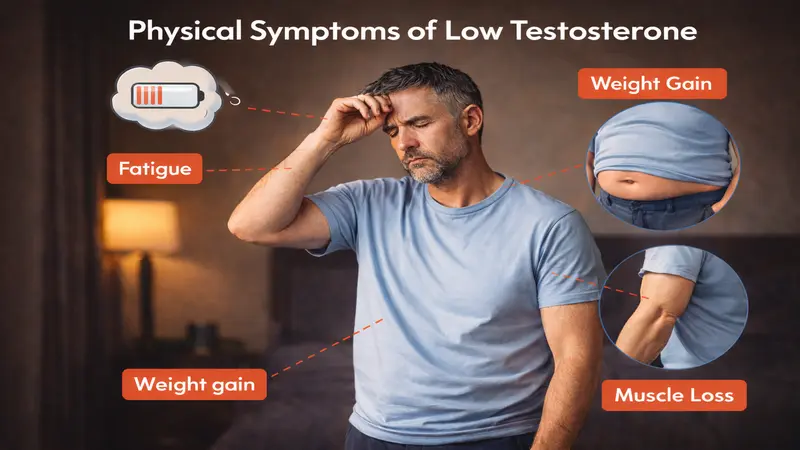
1. Persistent Fatigue and Low Energy
This is often the first symptom men notice. You feel tired despite getting adequate sleep. That afternoon slump becomes an all-day struggle. Coffee barely helps. You lack the physical and mental stamina you once had for work, exercise, or hobbies.
Unlike normal tiredness that improves with rest, testosterone-related fatigue is persistent and pervasive. You might describe it as feeling "drained" or "running on empty" regardless of how much you sleep.
2. Increased Body Fat, Especially Around the Midsection
Low testosterone makes it easier to gain fat and harder to lose it. You might notice:
- Accumulating belly fat despite no changes to diet or exercise
- Developing "love handles" or a "spare tire"
- Losing the defined physique you once maintained easily
- Increased breast tissue (gynecomastia)
This happens because testosterone helps regulate fat distribution and metabolism. Lower testosterone means your body preferentially stores fat—particularly visceral fat around your organs—and struggles to burn it for energy.
3. Decreased Muscle Mass and Strength
Testosterone is fundamentally anabolic—it builds muscle tissue. When levels drop, you experience:
- Difficulty building or maintaining muscle despite regular training
- Decreased strength in the gym (weights that used to be manageable now feel heavy)
- Longer recovery times after workouts
- Loss of muscle definition and tone
- A "softer" physique overall
Even if you continue strength training, low testosterone significantly hampers your body's ability to synthesize new muscle protein and maintain existing muscle mass.
4. Reduced Bone Density
Testosterone plays a crucial role in bone mineral density. Low levels can lead to osteoporosis or osteopenia (weakened bones), increasing your risk of fractures. While this develops slowly, early signs might include:
- More frequent minor injuries (sprains, strains)
- Joint pain or stiffness
- Back pain from vertebral compression
- Loss of height over time
5. Hair Loss
While male pattern baldness is primarily genetic, testosterone influences hair growth. Some men with low testosterone experience:
- Thinning scalp hair
- Loss of facial hair density
- Reduced body hair
This symptom varies significantly between individuals based on genetics and other hormonal factors.
6. Hot Flashes and Night Sweats
Yes, men can experience hot flashes too. Sudden drops in testosterone can trigger:
- Unexpected waves of heat and sweating
- Night sweats that disrupt sleep
- Flushing of the face and upper body
While less common than other symptoms, hot flashes affect about 10-15% of men with low testosterone.
Experiencing several of these physical symptoms?
Discover a Natural Solution That WorksMental and Emotional Symptoms
Testosterone doesn't just affect your body—it profoundly impacts your brain chemistry, mood, and cognitive function. Mental symptoms of low testosterone are often the most distressing because they affect how you experience life itself.

1. Depression and Low Mood
Low testosterone is strongly associated with depression in men. You might experience:
- Persistent sadness or emptiness
- Loss of interest in activities you once enjoyed
- Feelings of worthlessness or hopelessness
- Emotional numbness or detachment
- Increased irritability or frustration
Research shows that men with low testosterone are four times more likely to be diagnosed with depression than men with normal levels. The relationship is bidirectional—low testosterone can cause depression, and depression can lower testosterone.
2. Reduced Motivation and Drive
That competitive edge, ambition, and motivation that once drove you forward seems to have evaporated. You might notice:
- Difficulty setting or pursuing goals
- Procrastination on important tasks
- Lack of enthusiasm for career advancement
- Reduced competitiveness
- Settling for "good enough" when you used to strive for excellence
This isn't laziness—it's a hormonal shift that affects the neurotransmitter systems responsible for motivation and reward.
3. Brain Fog and Cognitive Difficulties
Testosterone supports cognitive function, particularly executive functions like planning, problem-solving, and decision-making. Low levels can cause:
- Difficulty concentrating or focusing
- Memory problems (especially short-term memory)
- Slower mental processing
- Trouble finding words or articulating thoughts
- Decreased mental sharpness
You might describe this as feeling like you're "thinking through fog" or that your brain isn't firing on all cylinders.
4. Increased Anxiety and Irritability
Hormonal imbalances can destabilize mood regulation. Men with low testosterone often report:
- Heightened anxiety or nervousness
- Shorter temper and increased irritability
- Overreacting to minor stressors
- Difficulty managing emotions
- Social withdrawal
5. Reduced Self-Confidence
Testosterone influences assertiveness and confidence. When levels drop, many men experience:
- Decreased self-esteem
- Self-doubt in professional and personal situations
- Hesitation to take risks or assert themselves
- Feelings of inadequacy
Sexual and Reproductive Symptoms
Perhaps the most well-known effects of low testosterone relate to sexual function and desire. These symptoms can significantly impact intimate relationships and overall quality of life.

1. Decreased Libido (Sex Drive)
Testosterone is the primary driver of male sexual desire. Low levels typically cause:
- Reduced interest in sex
- Fewer spontaneous sexual thoughts or fantasies
- Decreased initiation of sexual activity
- Sex feeling like "work" rather than pleasure
This isn't about finding your partner less attractive—it's a fundamental shift in your body's sexual drive system. Many men describe it as the "pilot light going out."
2. Erectile Dysfunction
While erectile dysfunction (ED) has multiple potential causes, low testosterone is a significant factor. Testosterone helps:
- Stimulate nitric oxide production (necessary for erections)
- Maintain penile tissue health
- Support the neural pathways involved in arousal
Men with low testosterone may experience:
- Difficulty achieving erections
- Inability to maintain erections during sexual activity
- Fewer spontaneous erections (like morning erections)
- Softer erections that lack firmness
It's important to note that ED can also result from cardiovascular issues, diabetes, or psychological factors. If you're experiencing ED, especially if it's sudden or severe, consult a healthcare provider to rule out serious underlying conditions.
3. Reduced Intensity of Orgasms
Testosterone influences the pleasure and intensity of sexual experiences. Low levels can lead to:
- Less pleasurable orgasms
- Decreased ejaculate volume
- Reduced sensitivity
4. Fertility Issues
Testosterone plays a crucial role in sperm production. Low levels can result in:
- Reduced sperm count
- Lower sperm motility (movement)
- Difficulty conceiving if trying to start or expand a family

Ready to Reclaim Your Sexual Vitality?
Discover a natural solution that addresses low testosterone at its root—supporting healthy hormone levels, blood flow, and male performance without prescriptions or side effects.
Watch: How This Natural Formula WorksScience-backed ingredients • No prescriptions required • 60-day guarantee
How Many Symptoms Do You Need to Have Low Testosterone?
There's no magic number. Some men with clinically low testosterone experience only two or three symptoms, while others experience many. The key factors are:
- Severity: How much do symptoms impact your daily life and happiness?
- Duration: Have symptoms persisted for weeks or months rather than days?
- Pattern: Do symptoms cluster across physical, mental, and sexual categories?
- Progression: Are symptoms gradually worsening over time?
Even one or two severe symptoms—like debilitating fatigue or complete loss of libido—warrant attention, especially if they're affecting your relationships, career, or mental health.
What Causes Low Testosterone?
Understanding the root causes helps determine the best approach to treatment. Low testosterone can result from:
Primary Hypogonadism
Problems with the testicles themselves, including:
- Aging (natural decline)
- Injury or trauma to the testicles
- Chemotherapy or radiation therapy
- Genetic conditions (like Klinefelter syndrome)
- Infections (mumps orchitis)
Secondary Hypogonadism
Problems with the pituitary gland or hypothalamus (brain regions that signal testosterone production):
- Pituitary tumors or diseases
- Chronic opioid use
- Obesity (fat tissue produces estrogen, which suppresses testosterone)
- Chronic illness or inflammatory conditions
- Medications (steroids, chemotherapy)
- Sleep apnea
Lifestyle and Environmental Factors
Many cases of low testosterone relate to modifiable factors:
- Chronic stress (elevated cortisol suppresses testosterone)
- Poor sleep quality or insufficient sleep
- Sedentary lifestyle and lack of exercise
- Excessive alcohol consumption
- Poor nutrition (especially inadequate healthy fats and micronutrients)
- Obesity and metabolic syndrome
- Exposure to endocrine-disrupting chemicals
How Is Low Testosterone Diagnosed?
Diagnosis requires blood testing. Your doctor will typically order:
- Total Testosterone: Measures all testosterone in your blood (bound and free)
- Free Testosterone: Measures testosterone not bound to proteins (the biologically active form)
- SHBG (Sex Hormone-Binding Globulin): The protein that binds testosterone
- LH and FSH: Pituitary hormones that regulate testosterone production
Testing should be done in the morning (between 7-11 AM) when testosterone levels peak. One abnormal test isn't sufficient for diagnosis—doctors typically want to see two separate morning tests showing low levels before making a diagnosis.
Your doctor may also test thyroid function, prolactin, and other hormones to rule out other conditions that can cause similar symptoms.
Natural Solutions for Low Testosterone Symptoms
While prescription testosterone replacement therapy (TRT) is one option, many men successfully address low testosterone symptoms through natural approaches—especially when the decline is age-related rather than due to disease.
Natural optimization focuses on supporting your body's own testosterone production rather than introducing synthetic hormones. This approach carries fewer risks and can be highly effective when implemented consistently.
Lifestyle Modifications That Work
The foundation of natural testosterone optimization includes:
- Strength training: Lifting heavy weights 3-4 times per week naturally boosts testosterone
- Quality sleep: 7-9 hours nightly allows optimal testosterone production
- Stress management: Reducing cortisol through meditation, nature time, and relaxation
- Healthy weight: Losing excess body fat, particularly belly fat
- Nutrient-dense diet: Adequate healthy fats, zinc, vitamin D, and magnesium
For a comprehensive guide on these lifestyle strategies, read our article on how to increase testosterone naturally after 40.
The Power of Botanical Support
In addition to lifestyle changes, certain plant-based extracts have been scientifically shown to support healthy testosterone production and address symptoms naturally. These include:
- Tongkat Ali: Clinically shown to increase testosterone by up to 37% while reducing cortisol
- Horny Goat Weed: Supports healthy blood flow and erectile function through natural PDE5 inhibition
- Stinging Nettle Root: Increases free testosterone by binding to SHBG
- Saw Palmetto: Supports prostate health and optimizes testosterone-to-DHT conversion
- Wild Yam Extract: Provides precursors for DHEA and hormone production
These botanicals work synergistically—addressing testosterone production, availability, conversion, and utilization from multiple angles simultaneously.

Get All 5 Science-Backed Ingredients in One Formula
Stop settling for diminished vitality. Our comprehensive natural solution combines clinically-studied botanicals in optimal dosages—specifically formulated to support healthy testosterone levels, sexual function, and male vitality in men over 40.
Watch How This Formula Works✓ No prescriptions needed • ✓ Science-backed ingredients • ✓ 60-day money-back guarantee
When to See a Doctor
While natural approaches work well for many men, certain situations require medical evaluation:
- Symptoms are severe and significantly impacting quality of life
- You experience sudden onset of symptoms rather than gradual changes
- You have symptoms of very low testosterone (complete loss of libido, severe depression, inability to achieve erections)
- Natural methods haven't improved symptoms after 3-4 months of consistent effort
- You have other concerning symptoms like unexplained weight loss, chronic pain, or vision changes
- You're trying to conceive and experiencing fertility issues
A comprehensive medical evaluation can identify underlying conditions and help you make informed decisions about treatment options.
The Bottom Line
Low testosterone symptoms are common in men over 40, but they don't have to control your life. Recognizing the signs—whether physical fatigue and weight gain, mental fog and low mood, or decreased libido and sexual function—is the crucial first step toward reclaiming your vitality.
While age-related testosterone decline is natural, debilitating symptoms are not inevitable. Through strategic lifestyle modifications and evidence-based natural support, many men successfully optimize their testosterone levels and restore the energy, strength, confidence, and sexual vitality they thought were gone forever.
The question isn't whether you can address these symptoms—it's whether you're ready to take action. Your body has an incredible capacity to restore hormonal balance when given the right nutrition, movement, recovery, and botanical support.
Don't accept diminished vitality as your new normal. You deserve to feel energized, strong, confident, and fully alive—regardless of your age.
Take the First Step Today
Watch our short video to learn how thousands of men over 40 are naturally supporting healthy testosterone levels and reclaiming their vitality.
Watch the Free PresentationMedical Disclaimer: This article is for informational purposes only and is not intended as medical advice. The symptoms described can have multiple causes beyond low testosterone. Always consult with a qualified healthcare provider for proper diagnosis and before making changes to your health regimen, especially if you have existing medical conditions or take medications. Do not use this information to self-diagnose or self-treat.